
Transcendental Meditation (TM) has been studied for decades, producing a research literature that is unusually large for a single meditation technique. That literature includes randomized trials, physiological studies, cardiovascular research, studies of anxiety and post-traumatic stress, and broader investigations of meditation and health. The important question is therefore no longer simply, “Has TM been studied?” […]
Samādhi in Patañjali’s Yoga Sūtras: Meanings, Methods, and Common Misreadings

A beginner-friendly guide to samādhi in Patañjali’s Yoga Sūtras: what it means, how it fits the eight-limbed path, practical steps to train attention, and the most common modern misreadings—plus careful notes on what science can and can’t conclude.
Transcendental Meditation as a Technology of Consciousness
What makes Maharishi Mahesh Yogi’s effortless technique distinct—and why transcending thought matters Transcendental Meditation, as taught by Maharishi Mahesh Yogi, is not simply another way to concentrate, observe the breath, control attention, or create a peaceful mood. Its defining purpose is more fundamental: to allow the mind to settle naturally through progressively quieter levels […]
Comparative Models of Consciousness

🧠 Comparative Models of Consciousness (Traditional Knowledge → Comparative Structure) From Isolated Theories to Comparative Understanding The study of consciousness spans multiple domains: neuroscience and cognitive science physics and information theory philosophy of mind contemplative traditions Each offers partial insight. Modern science provides: measurable correlates predictive frameworks formal models At the same time, the […]
Limits of Materialism

🧠 Limits of Materialism (Traditional Knowledge → Comparative Structure) Introduction: A Framework Under Pressure Materialism—more precisely, physicalism in its modern form—has been one of the most successful frameworks in the history of science. It assumes that: reality is fundamentally physical all phenomena can, in principle, be explained in terms of physical processes consciousness arises […]
Observer-Centered Epistemologies

🧠 Observer-Centered Epistemologies (Traditional Knowledge → Comparative Structure) Introduction: When the Observer Cannot Be Removed Modern science was built on a powerful assumption: that reality can be described independently of the observer. This assumption enabled extraordinary progress in physics, chemistry, and engineering. Yet at the foundations of modern physics—and in the study of consciousness—this […]
Meditation as Technology of Consciousness
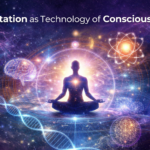
🧠 Meditation as Technology of Consciousness (Traditional Knowledge → Comparative Structure) Introduction: From Practice to Method Meditation is often presented as a spiritual exercise, a wellness technique, or a cultural tradition. Within the scope of Species Universe, it is approached differently: Meditation is treated as a technology of consciousness. This does not imply machinery […]
Vedic Knowledge Systems
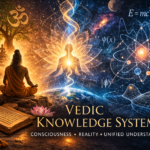
Vedic Knowledge Systems (Traditional Knowledge → Comparative Structure) Introduction: The Vedic Tradition as a System of Inquiry Among the world’s ancient knowledge traditions, the Vedic philosophical systems of India stand out for their sustained and systematic exploration of consciousness. Developed over millennia through texts such as the Vedas and the Upanishads, this tradition attempts […]
Methodological Framework

Methodological Framework (Traditional Knowledge – Comparative Structure) Introduction: Why a Methodological Framework Is Necessary The purpose of the Traditional Knowledge section is not to romanticize ancient traditions, nor to claim that pre-modern systems secretly anticipated modern physics. This page establishes the rules under which comparison is conducted within the Traditional Knowledge section. Its […]
Curated Library: Traditional Knowledge

Curated Library: Traditional Knowledge Inner Science, Ancient Insight, and the Structure of Reality Why Traditional Knowledge Belongs Here Long before particle accelerators and formal equations, human beings investigated reality using the only instrument available to them directly: awareness itself. Many contemplative traditions developed disciplined methods for examining: The nature of experience The structure of […]
- « Previous Page
- 1
- 2
- 3
- 4
- …
- 14
- Next Page »