
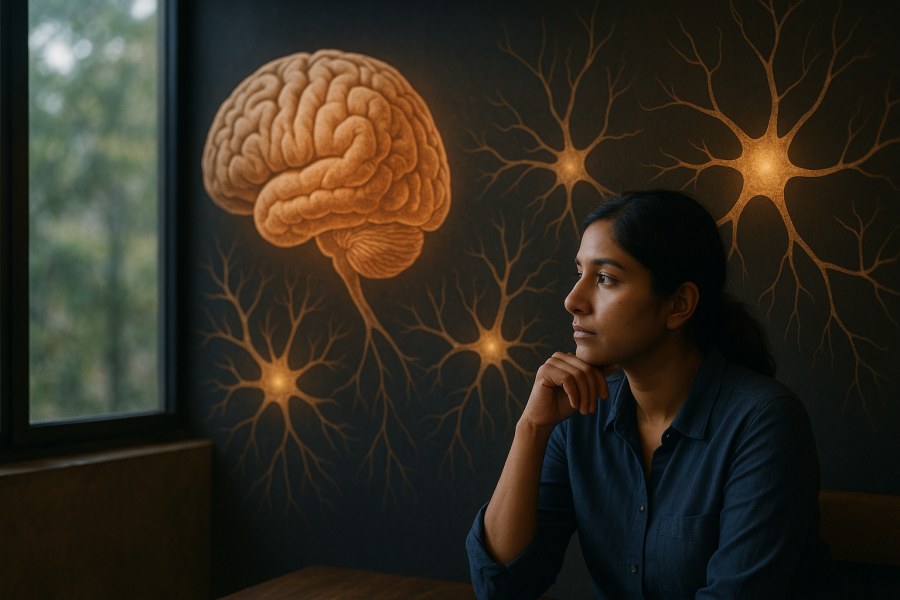


Source attribution: This post is a curated breakdown of Regenerative Astrocytes Repair Brain Damage, with additional scientific context and philosophical analysis from Species Universe.
If you or someone close to you has dealt with a brain injury, stroke after-effects, or an autoimmune condition that attacks the nervous system, you’ve probably encountered a discouraging theme: the adult brain repairs itself, but often not “all the way.” Many people also wonder what recovery actually depends on—neurons, immune activity, inflammation, sleep, rehab, and (increasingly) the brain’s support cells.
This post breaks down a specific new claim about those support cells—astrocytes—and a mechanism that (if it holds up beyond mouse models) could reshape how scientists think about repair in adult brain tissue. We’ll summarize what the source report says, why it matters for readers of Species Universe, and what you can personally verify if you’re reading about this topic on your own device (because headlines about “brain regeneration” can easily outrun what a study actually demonstrates).
Who is affected—and why astrocytes matter
Astrocytes are star-shaped glial cells that help keep neural tissue stable: they support metabolic needs, help regulate the chemical environment around synapses, and interact closely with blood vessels. When astrocytes are impaired or destroyed, neurons may become more vulnerable—not only because “support” is missing, but because the whole tissue environment can change.
The source frames this as relevant to focal injuries and autoimmune damage—particularly neuromyelitis optica spectrum disorder (NMOSD), which is commonly discussed in relation to antibodies targeting the astrocyte water channel aquaporin-4 (AQP4). Even if you’re not tracking NMOSD specifically, the broader point is important: some neurological damage involves loss or dysfunction of glial networks, not only neurons.
What the source says
The report describes a study in living mice in which researchers observed a specialized population of “regenerative” astrocytes near a lesion boundary. According to the source, instead of only dividing locally (a common expectation for how glial repopulation might occur), these boundary astrocytes extend long processes into the damaged area and send newly formed daughter cell nuclei traveling along those processes into the lesion zone. The end result, as presented, is repopulation of the depleted region and rebuilding of functional astrocyte networks.
The source also highlights several methods and observations:
- Two-photon microscopy in vivo: the researchers reportedly watched this process in real time in living mouse brain over weeks.
- Longitudinal gene mapping / spatial transcriptomics: the team reportedly tracked which genes and pathways were temporarily activated during repair, and saw that the injury-associated molecular response resolved as the astrocyte network was restored.
- Model details (as summarized): focal astrocyte loss was induced using aquaporin-4 antibody-mediated ablation in the somatosensory cortex, presented as relevant to astrocytopathy in NMOSD.
The story positions this as overturning a long-held assumption that adult astrocyte networks cannot be fully replaced after loss, and suggests the temporarily activated signaling pathways could eventually become therapeutic targets for conditions involving astrocyte destruction.
Why this is scientifically interesting (even before it’s clinically useful)
Within established neuroscience, astrocytes are no longer viewed as passive “brain glue.” They are active participants in maintaining neural function—supporting homeostasis, influencing blood flow, and shaping the chemical environment that neurons depend on. So a mechanism that helps reconstitute astrocyte networks after injury could matter indirectly to neural survival and circuit stability.
The striking part is the mechanism described: movement of nuclei along long cellular processes. If confirmed broadly, it suggests the adult brain might have more architectural flexibility in glial repair than many people assume.
What this does not show (and what remains uncertain)
Because this is a news-style summary (not the full paper text), readers should hold a few boundaries clearly:
- Mouse model ≠ human outcome: Even excellent in vivo mouse imaging does not guarantee the same repair dynamics occur in human brains, or that they can be therapeutically controlled.
- Astrocyte repopulation ≠ “brain regeneration” in the popular sense: The report focuses on rebuilding astrocyte networks after astrocyte loss. It does not claim regeneration of lost neurons or restoration of complex cognitive function by itself.
- Mechanism vs. intervention: Identifying activated genes/pathways is a long way from safe, effective therapies. Many pathways involved in repair are also involved in scarring, inflammation, cancer risk, or unintended remodeling.
- Observation vs. interpretation: The source presents nuclear movement as a driver of lesion repopulation. A careful reader would still want to know how alternative explanations were ruled out (for example, whether whole-cell migration or local proliferation could also explain parts of the repopulation pattern).
Why this matters to Species Universe readers (without overreaching)
Species Universe often sits at the boundary between what we can measure and what we infer about mind, experience, and recovery. This story is a good example of why we try to keep those layers separate:
- Established science: Astrocytes are essential for neural tissue health, and glial responses to injury are a major part of modern neuroscience.
- Reported research (this source): A specific, visually tracked repair mechanism—nuclear translocation along astrocytic extensions—may help repopulate astrocyte-depleted zones in adult mice.
- Philosophical interpretation (tempting, but not proven): It’s easy to jump from “the brain repairs itself more than expected” to metaphysical conclusions about consciousness being fundamental or the mind “healing the brain.” This study, as summarized, doesn’t support that leap. It’s a cellular mechanism claim, not a measurement of consciousness or meaning.
If you want a grounded orientation to how Species Universe approaches mind questions—without confusing “surprising biology” with “proof of consciousness-first metaphysics”—see our overview at Consciousness & Awareness and the framework page Species Universe Framework.
A practical checklist: what to verify on your own computer before you share or rely on this
Because science headlines are often compressed, here’s a short set of checks you can do in minutes to keep your understanding anchored:
- Check the original paper details: The source lists a Nature Neuroscience article with a DOI. Verify the title, methods, and figures match the summary (especially anything about “nuclear translocation” and how it was tracked).
- Confirm what kind of injury model was used: The summary mentions aquaporin-4 antibody-mediated ablation. Make sure you understand: was this mimicking autoimmune attack? How focal was the lesion? What brain area?
- Look for how “regenerative astrocytes” were defined: Was it a genetically distinct subtype, a temporary state induced by injury, or a location-based description (perilesional astrocytes behaving differently)?
- Separate cellular restoration from functional recovery: Did the study measure electrophysiology, behavior, or network function—or mainly cellular architecture and transcriptomic resolution over time?
- Time course matters: The summary says the response resolves as networks restore. Check the actual timeline: days, weeks, and what “resolved” means (expression levels? morphology? both?).
- Ask what was ruled out: Did the authors exclude explanations like local proliferation inside the lesion border, migration of whole astrocytes, or invasion by other glial types?
Context: how glial repair intersects (and doesn’t) with consciousness questions
It’s reasonable to ask: if astrocytes help keep neural networks stable, could better astrocyte repair influence cognition, mood, or conscious experience after injury? In principle, yes—because tissue stability and neuronal viability affect the brain states that correlate with experience. But that remains a step beyond what’s summarized here.
In other words, this is best read as a story about the brain’s “support ecology.” It’s the kind of mechanism that could one day change rehabilitation medicine, neuroinflammation treatment, or trauma recovery—but it does not directly address the hard problem of consciousness or prove any theory of mind. If you’re exploring how neuroscience models link brain dynamics to experience (without claiming final answers), our hub Neuroscience models of consciousness is a better starting point than trying to extract metaphysics from a repair mechanism.
For readers who like bridging modern findings with older contemplative maps: it can be meaningful to notice that many traditions emphasize the body’s capacity for restoration when conditions are right. That’s a philosophical and practical parallel—not scientific proof that ancient descriptions anticipated astrocyte nuclear migration. If you enjoy that kind of careful cross-reading, see Vedic Science & Traditional Knowledge with the understanding that resonance is not equivalence.
Takeaway
The source report presents a compelling, specific claim: in adult mice, a subset of astrocytes at a lesion boundary may help repopulate an astrocyte-depleted injury zone by sending newly formed nuclei along long cellular processes, alongside a temporary gene-expression program that fades as the network is restored. If confirmed and generalized, this would expand the scientific picture of how adult brain tissue can rebuild its support architecture after certain kinds of damage.
The responsible stance right now is hopeful but bounded: it’s a mechanistic finding in an animal model with intriguing therapeutic implications, not a demonstrated human treatment and not evidence for any particular philosophy of mind. The best next step for curious readers is to verify the original paper’s methods and what outcomes were actually measured before translating the headline into expectations about recovery.
If you’re thinking about how “many minds” or “one mind” interpretations sometimes piggyback on neuroscience stories, you might also enjoy our reflective question-essay Do you think the number of minds in the universe is one?—read as philosophy, not as a conclusion forced by data like this.
Bottom line
For most readers, the safest approach is to treat the source as a useful starting point, then verify the details on your own device before making changes. If the issue affects a work computer, important files, or business operations, get help before taking risky steps.
Q&A
What is the main discovery described in the source?
The source reports that a specialized group of “regenerative” astrocytes at the edge of a lesion in adult mouse brain can help repopulate the damaged zone by sending newly formed daughter cell nuclei along long astrocytic extensions into the depleted area, contributing to rebuilding an astrocyte network.
Does this mean the adult human brain can fully regenerate after injury?
No. As summarized, the finding is about astrocyte network repair in a mouse model after focal astrocyte loss. It does not demonstrate full human brain regeneration, neuron replacement, or guaranteed functional recovery.
How did the researchers reportedly observe the process?
The source says the team used in vivo two-photon microscopy to track changes over weeks in living mice, and paired that with longitudinal gene mapping / spatial transcriptomics to see which genes and pathways were activated during repair.
Why are astrocytes important in brain health and recovery?
Astrocytes help maintain the local environment that neurons depend on (homeostasis), interact with blood vessels, and support tissue stability. Losing astrocytes can disrupt that environment, potentially affecting neuron survival and circuit function.
What should a reader verify before sharing claims about “brain regeneration” from this story?
Verify the original paper’s model (how astrocyte loss was induced), how “regenerative” astrocytes were defined, whether outcomes were structural vs. functional, the time course of recovery, and what alternative explanations (like whole-cell migration or local proliferation) were tested or ruled out.
Related posts:
 Neural Correlates of Consciousness: What We Can Measure—and What We Can’t
 Global Neuronal Workspace Theory (GNWT): Mechanism, Evidence, and the Strongest Objections
 Meditation and Awareness: What Lab Measures Capture vs Lived Experience
 Quantum Consciousness Proposals: Mechanisms, Objections, and Testable Bets













Leave a Reply