
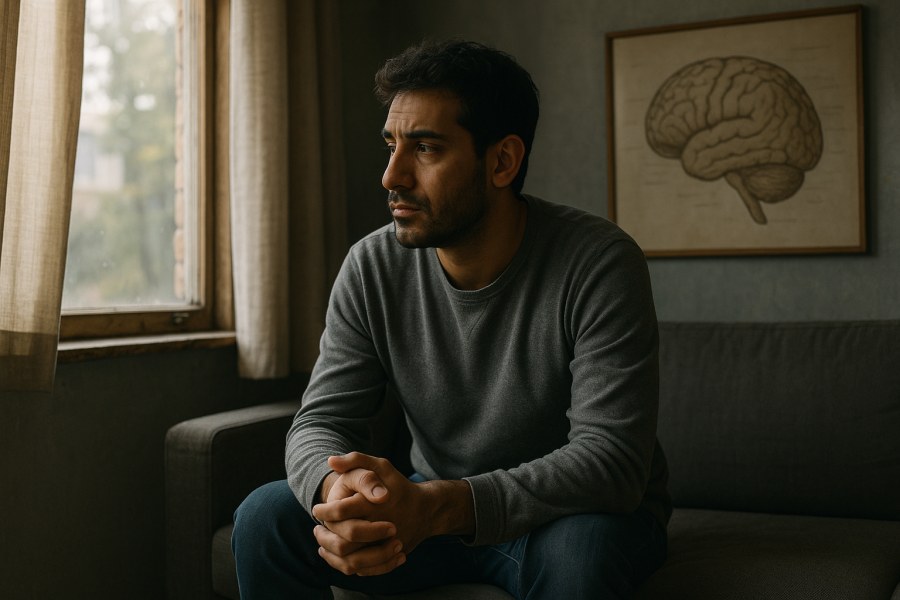


Source attribution: This post is a curated breakdown of Shame, Stigma, and Culture Prevent Male Domestic Violence Survivors From Seeking Help, with additional scientific context and philosophical analysis from Species Universe.
When people talk about intimate partner violence (IPV), many of us carry an unspoken mental image of who “counts” as a victim and what getting help is supposed to look like. That mismatch matters, because it can leave real people—especially men—feeling isolated, disbelieved, or unsure their experience even qualifies as abuse.
In this post for Species Universe, you’ll learn what a large U.S. study reports about why male IPV survivors often avoid help, how those barriers can differ across demographic groups, and what practical, low-friction steps can make support more accessible. We’ll also separate what the source claims from reasonable interpretation, and we’ll be careful not to treat cultural patterns as destiny or stereotypes.
Why this matters (beyond “awareness”)
Help-seeking is not just a personal choice. It’s shaped by language (“Is this abuse?”), social risk (“Will anyone believe me?”), and identity (“What does it mean about me if I admit this?”). When those pressures stack up, even highly capable people can stay silent—sometimes for years—while harm continues.
For Species Universe readers, there’s also a broader theme: human experience is not only biology; it’s meaning-making. Shame and stigma are not abstract concepts—they are lived states of mind and body. Understanding the psychology of why people don’t reach out is part of understanding consciousness in context: how self-models, cultural narratives, and perceived social consequences shape what a person can acknowledge, name, and share.
What the source says
The Neuroscience News piece reports on a large-scale study from George Mason University examining barriers that keep men from seeking help after experiencing IPV. According to the summary, the study included nearly 1,200 male victims and compared patterns across non-Latino Black, Latino, and non-Latino White men.
The main reported barriers
- Seeing the abuse as a private matter was reported as the most common barrier across all groups.
- Fear of retaliation was also identified as a barrier (the summary does not specify retaliation type, such as social, legal, financial, or physical).
- Shame and embarrassment were emphasized, especially for Latino men in the reported breakdown.
- Concern about not being believed appeared as a barrier, with the summary noting Black men were less likely to report that concern compared with other groups.
- Difficulty labeling the experience as “abuse” was highlighted as more common among White men in the summary’s group comparisons.
Who is involved and where it was published (as reported)
- The summary names Lyric Russo (postdoctoral researcher) as first author.
- It names Denise Hines as a leading IPV researcher and a senior author.
- It reports the paper was published in Psychology of Men & Masculinities and described as peer-reviewed.
- It frames the work as addressing gaps in IPV research for underrepresented demographics and argues for trauma-informed, culturally responsive, gender-inclusive services.
Reading the findings carefully: what they do—and don’t—tell us
The study’s reported headline—“privacy” as the top barrier—can be easy to misread. It doesn’t necessarily mean men “prefer” to handle abuse alone. In real life, “private matter” can be a protective cover for multiple fears:
- Identity threat: “If I say this out loud, I become a different person in other people’s eyes.”
- Role conflict: “Men are supposed to be strong / in control / the protector.”
- System risk: “What if the police, courts, or services assume I’m the perpetrator?”
- Relationship and family cost: “If I disclose, I might lose access to my kids or community.”
- Cognitive uncertainty: “Maybe it wasn’t ‘really’ abuse—maybe I’m overreacting.”
In other words, “keeping it private” can function like a mental compression algorithm: a short phrase that contains many unspoken calculations about danger, shame, and futility.
Group differences: use them to improve services, not to stereotype people
The source reports differences by racial/ethnic category (for example, shame emphasized for Latino men; difficulty labeling as abuse emphasized for White men). The most constructive way to read this is: different communities may face different “friction points” on the path from experience → naming → disclosure → care.
But it would be a mistake to treat these patterns as fixed traits of individuals. Within any group, individuals vary widely based on age, sexuality, immigration history, religious background, prior trauma, disability, and whether their community has trustworthy, culturally competent services.
Practical steps: lowering the barriers in real life
This section goes beyond the source by translating the reported barriers into concrete actions survivors, friends, clinicians, and community leaders can try. Think of it as “removing obstacles,” not forcing a single right path.
1) If “it’s private” feels like the main barrier, try a privacy-preserving first step
- Write it down for yourself (what happened, when, how you felt). Not as “evidence,” but as clarity. Many people can’t seek help because they can’t yet organize the story.
- Choose a low-exposure channel: one trusted person, a confidential helpline, or a therapist bound by privacy rules (with standard safety exceptions that vary by jurisdiction).
- Use “partial disclosure”: start with one piece (“I’m not safe at home lately”) rather than the whole history.
2) If labeling is hard, use behavior-based language (not identity-based labels)
The source highlights that some men struggle to label experiences as “abuse.” You can bypass the label at first and focus on observable patterns. For example:
- “My partner controls who I see and punishes me when I talk to friends.”
- “Arguments end with threats, property damage, or physical intimidation.”
- “I’m being pressured sexually when I don’t consent.”
- “I’m afraid of what happens if I say no.”
Many support services can respond to these descriptions even if you never use the word “abuse” in the first conversation.
3) If shame is front and center, aim for dignity-first support
Shame usually says: “This means something about who I am.” A dignity-first approach answers: “What happened to you matters, and seeking support is a competent act.”
- Seek helpers trained in trauma-informed care (the source explicitly argues for trauma-informed and culturally responsive interventions).
- Avoid “debate mode” with yourself (“Was it really that bad?”). Ask a simpler question: “Is my life getting smaller? Am I more afraid than I used to be?”
- Choose language that preserves agency: “I’m exploring options” can feel more tolerable than “I need help.”
4) If fear of retaliation is the barrier, prioritize planning over proving
The source lists fear of retaliation as a key barrier. A practical implication is that “seeking help” may need to begin as risk-reduction planning rather than confrontation.
- Consider what retaliation could look like in your situation (emotional escalation, physical harm, stalking, public humiliation, false allegations, financial sabotage, custody threats).
- Pick safer times and devices for outreach if you suspect monitoring.
- When possible, ask services what privacy and documentation practices they use.
Importantly, none of this implies you must handle it alone—it means the first help you seek should match the risk profile you’re living with.
5) If “I won’t be believed” is the barrier, broaden what “believed” can mean
Belief can be social (“my friends accept my story”), institutional (“authorities take it seriously”), or internal (“I trust my own perception”). Even if one path feels blocked, another may be open first.
- Start where the probability of respectful listening is highest (a clinician, advocate, or trusted friend with a track record of discretion).
- Ask direct questions before disclosing details: “Do you support male survivors?” “How do you handle situations where the survivor is a man?”
- Keep copies of key documents if it is safe to do so (messages, medical notes, photographs). This is a personal safety decision; it can also increase risk if discovered.
Why this belongs on Species Universe: identity, narrative, and the lived mind
Species Universe often explores how internal models shape perception, decision-making, and what people can admit to themselves. IPV help-seeking is a vivid example: the barrier is not only external services, but also how the self is constructed under cultural pressure.
If you want a broader grounding in how contemporary science frames mind and experience, our overview of consciousness and awareness and our primer on neuroscience models of consciousness are helpful context. For how we try to bridge scientific humility with meaning and lived experience across traditions, see the Species Universe framework.
Bottom line
The source reports a large study of nearly 1,200 men indicating that male IPV survivors often avoid seeking help because they see the abuse as private, fear retaliation, feel shame, worry they won’t be believed, or struggle to label their experience as abuse—along with meaningful differences in which barriers are most salient across demographic groups.
For readers, the actionable takeaway is not “men need to speak up,” as if willpower were the missing ingredient. The more realistic takeaway is: reduce the costs of disclosure. Make privacy-preserving entry points, use behavior-based language when labels are hard, prioritize dignity-first listening, and match support to safety risk. That’s how barriers come down—one step small enough to take.
Q&A
What did the study identify as the biggest barrier to men seeking help after IPV?
In the source summary, the most common barrier across all groups studied was viewing the abuse as a “private matter.”
Did the reported barriers vary by racial or ethnic group?
Yes. The summary reports differences in which barriers were more likely to be emphasized: shame/embarrassment was highlighted more for Latino men; difficulty labeling experiences as abuse was highlighted more for White men; Black men were reported as less likely to cite fear of not being believed.
If I’m unsure it “counts” as abuse, what’s a useful first step?
A practical first step is to describe the behaviors without labels (coercion, threats, control, intimidation, unwanted sexual pressure, fear). This can help you talk to a trusted person or professional even if the word “abuse” feels complicated.
How can someone support a male survivor without making it worse?
Start with dignity-first listening: take the account seriously, avoid jokes or minimization, ask what safety concerns exist (including retaliation), and offer choices for next steps rather than pushing a single solution.
Does this research prove anything about consciousness or human nature?
No. It’s best understood as applied psychology and public health: how identity, stigma, and perceived social risk shape what people can disclose and what help they will use. It can inform broader reflection on the lived mind, but it doesn’t establish any metaphysical conclusion.
Related posts:
 Global Neuronal Workspace Theory (GNWT): Mechanism, Evidence, and the Strongest Objections
 Meditation and Awareness: What Lab Measures Capture vs Lived Experience
 Regenerative Astrocytes and a Surprising Way the Adult Brain May Repair Damage
 TIMP2 and the Aging Brain: Can a “Youth-Associated” Protein Rejuvenate Microglia?













Leave a Reply